- Date 2026-01-09
- Hit 19
INTRO-DUCING GLOBAL COMPANIES IN IFEZ
Exploring a Global Company at IFEZ
<Featuring YG-1>
Song Ho-keun
Chairman of YG-1
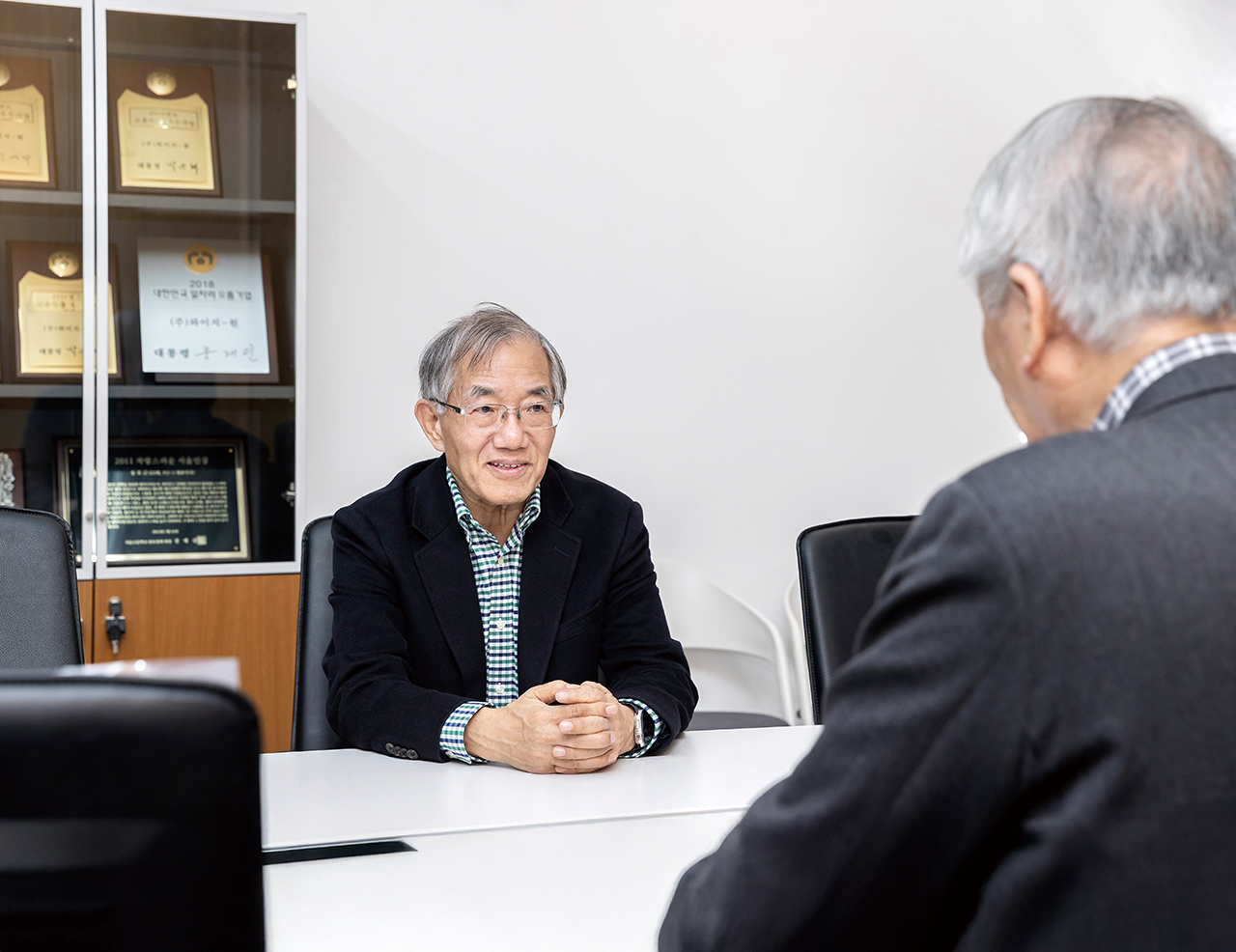
End mills are small cutting tools with a wide range of applications. They are indispensable in the manufacturing of automobile and aircraft components, as well as in the precision machining of electronics such as smartphones and in mold-making. Their ability to cut and shape metal along curved contours makes end mills fundamental tools in metalworking processes. Shin Yong-seok, IFEZ’s Special Advisor of International Cooperation, met with Song Ho-keun, Chairman of YG-1 (Yang Ji Won Tools), which has been devoted to the R&D and global dissemination of small cutting tools for the past 45 years, at the company’s headquarters in Songdo International City. Their meeting explored the journey that has led YG-1 to aspire to become the world’s top cutting-tool manufacturer, surpassing traditional end mill powerhouses such as Germany and Japan. Having just returned from a recent business trip to Japan, Chairman Song was preparing for his next visit to the United States.
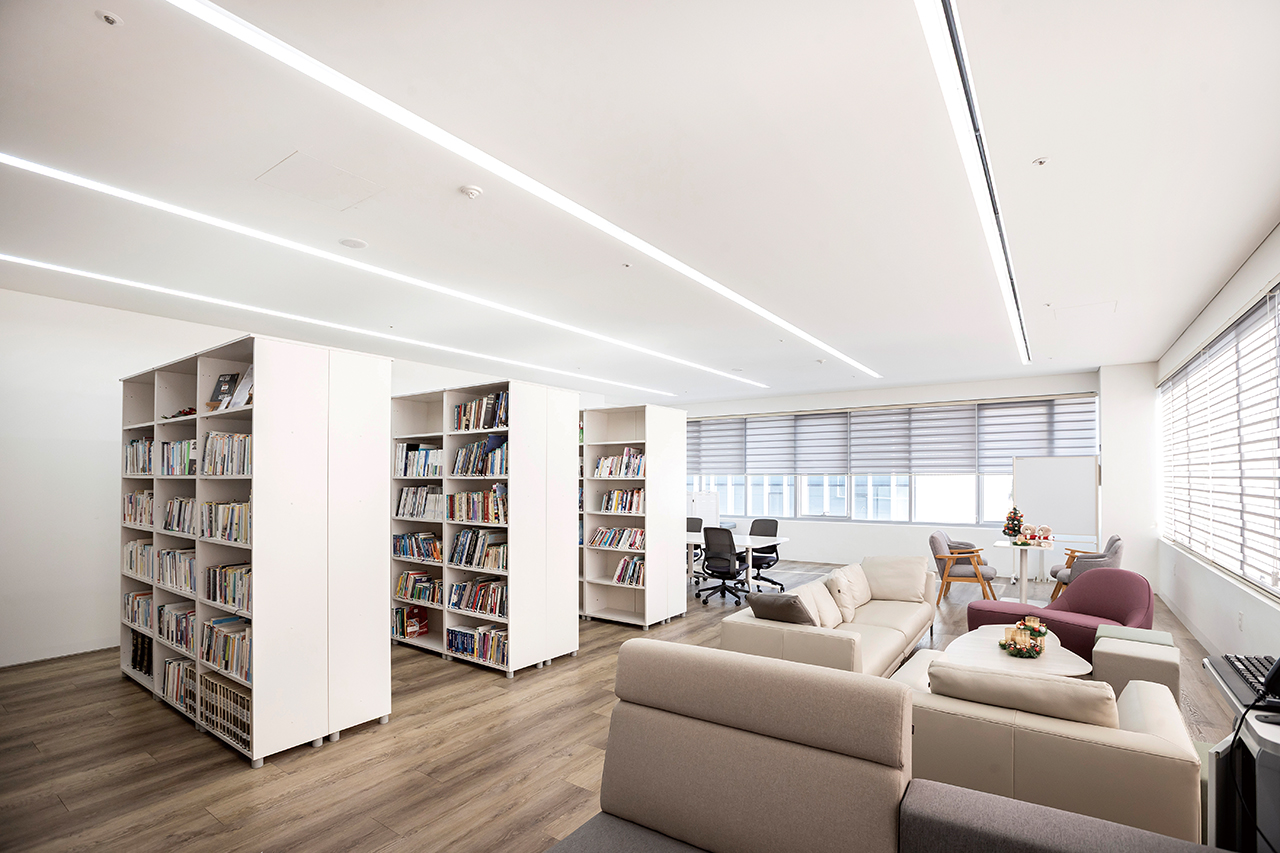
Your headquarters do not look like a typical metal processing facility. When was it completed?
Actually, leading up to the completion of our headquarters in 2020, we made many business investments with the same level of scrutiny that we apply to the production of our various cutting tools while also focusing on ways to actively support R&D. We designed the headquarters to leave a strong impression on visiting overseas buyers, while also devoting significant effort to improving employee satisfaction. By adopting an open seating system in the cafeteria and introducing greater flexibility in parking facilities, we have given employees more choice, while also actively reshaping the work environment through a focused work hours policy.
As far as I know, you graduated from the Department of Mechanical Engineering at Seoul National University. After graduation, did you begin your career at Taehwa Group, a company widely known for its shoe manufacturing business?
I worked at Taehwa Machinery, a cutting-tool manufacturer within the Taehwa Group, and even at that time, end mills were seen as a promising technology with solid profitability.I succeeded in developing overseas markets and concluding export contracts, but I eventually left the company after failing to meet delivery deadlines. After registering my own business in 1981, I set up a factory in Bupyeong, Incheon the following year and made my first export of end mills to the United States, totaling USD 250,000 in 1983. I spent nearly all my time at the factory, even handling daily necessities such as preparing meals for my 12 employees, as I committed myself fully to exports.
You are known to travel abroad quite often. We happened to meet on a flight to Germany several years ago, if I remember correctly.
have flown more than 15 million miles so far. With three to four overseas business trips each month, I would likely rank among the top in total flight mileage, excluding airline staff. The company maintains 33 overseas facilities in 26 countries, with about 4,300 employees. Accordingly, overseas travel is a necessity, allowing me to visit sites firsthand, engage with buyers, attend exhibitions, and keep pace with market trends. Our largest factories are located in Qingdao, China, where we run two facilities, one serving export markets and the other serving domestic markets. The facilities also produce some semi-finished goods which are shipped to Korea for further processing. When it comes to broader global market trends, India stands out as a key area of interest for us.
Was Germany the leading country in the end mill industry before YG-1 rose to prominence in the global market?
At that time, the market was dominated by companies from Germany and Japan. In particular, Japan was home to major companies producing end mills, placing YG-1 in direct competition with renowned Japanese industry giants. However, today a Swedish company has taken the lead in the cutting tool sector. That’s why we are fully committed to becoming the world’s number one company by 2035.
How many types of cutting tools do you manufacture?
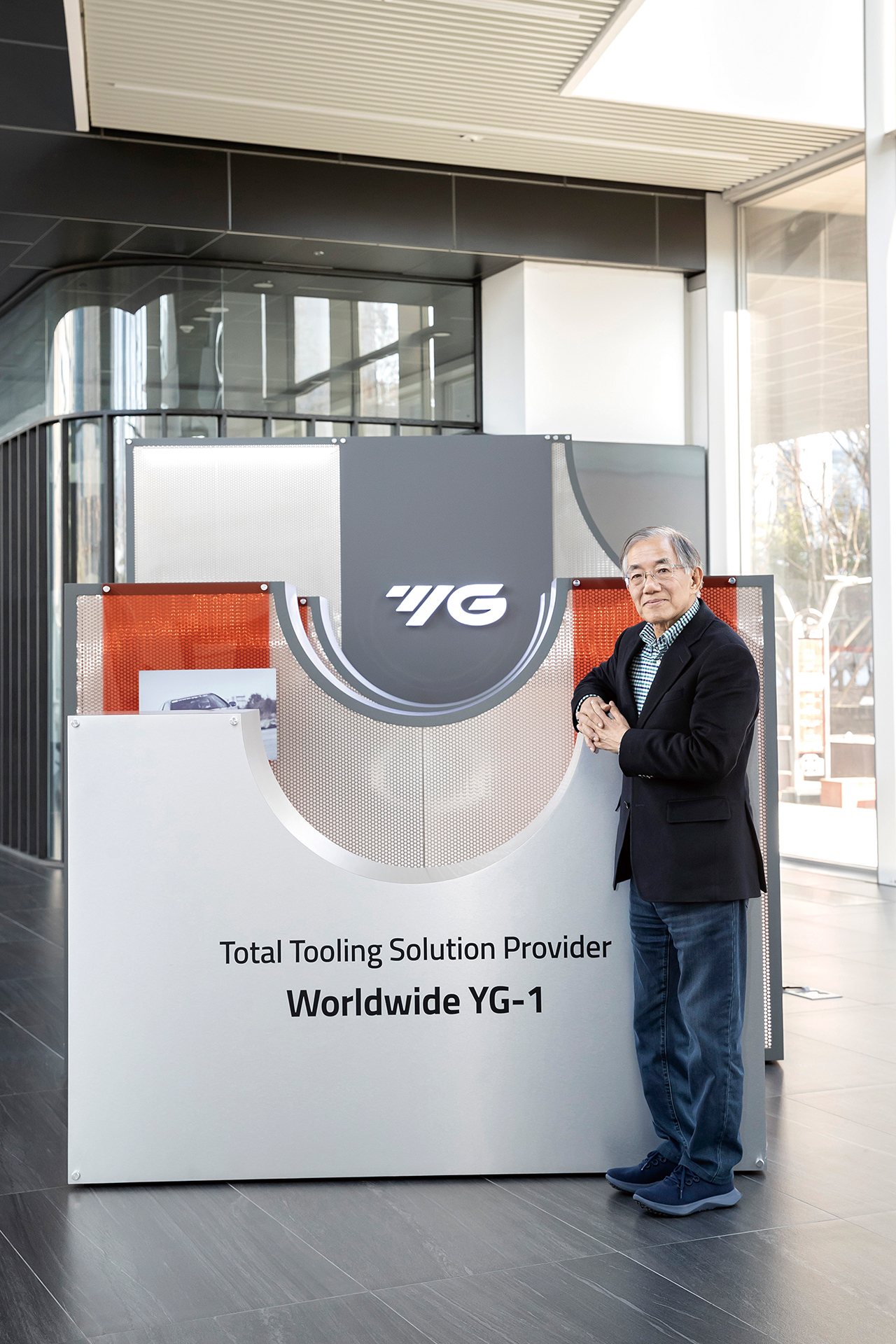
Given the wide range of sizes, even our standard lineup alone consists of approximately 100,000 types. For this reason, highly precise technology is required. In plain terms, cutting tools are consumables used in machine tools to remove excess metal from a workpiece. In particular, end mills are widely used throughout the mold-making process. For cutting tools such as drills used for drilling holes and taps for threading, YG-1 is a top-tier global seller, and it holds the number one position worldwide in end mills.
In addition to your frequent overseas business trips, you are known for your early-morning work routine.
I still start my work around 6 a.m., maintaining an early-morning routine. To reach my goal of becoming the world’s number one cutting-tool company in ten years, I hold on to my belief that one should never step back from a dream. To this end, expanding our market share in indexable insert milling cutters, which make up about 60 percent of the cutting-tool market, is a key step. Yet as a latecomer, YG-1’s global market share currently remains at around 1 percent. Nevertheless, I will continue to pursue this challenge with confidence.
Following your success in the cutting-tool industry, did you ever consider expanding into other business areas?
Never! Without sticking with only one thing, how could I possibly become the world’s number one in the cutting-tool market? I believe that chasing opportunities outside the cutting-tool business would weaken the competitive strength of our products. Making cutting tools is what brings me true satisfaction, and my only focus is on building the world’s best company together with our domestic and overseas employees.
Despite the growing challenges posed by IT and AI, YG-1 has emerged as a global leader in core manufacturing tools just 45 years after its founding, standing as a source of pride for both Incheon and Korea, and as a symbolic cornerstone of the declining global manufacturing industry. Today’s conversation underscores the fact that machine engineering, the backbone of manufacturing, cannot exist without cutting tools.Thank you for taking the time out of your busy schedule to share such meaningful insights.
Most Viewed
-
-
Insight in site, IFEZ IFEZ is a portal to the world and a hub of global innovation. It hosts leading organizations and companies across a wide variety of fields, from UN agencies and international organizations to domestic and multinational corporations, top global firms, Incheon Global Campus (IGC), and the Global Center. IFEZ brings you updates on the companies and organizations that are driving change and development.