- Date 2026-08-28
- Hit 30
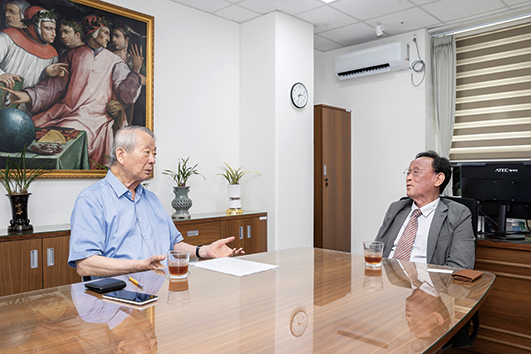
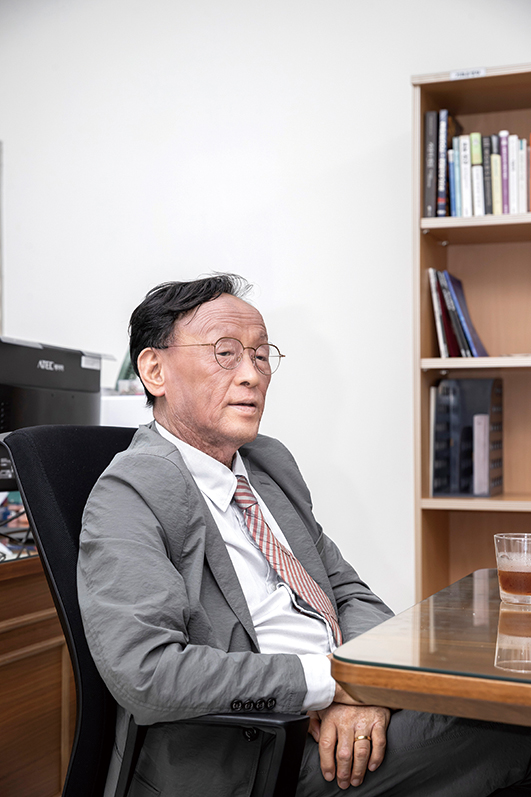
Shin Yong-suk(hereafter “Shin”)
Congratulations on your appointment as Director of the National Museum of World Writing Systems. Your appointment has been warmly welcomed not only in Incheon but also throughout the historical and cultural communities of the Seoul metropolitan area. Could you share your academic background with us?
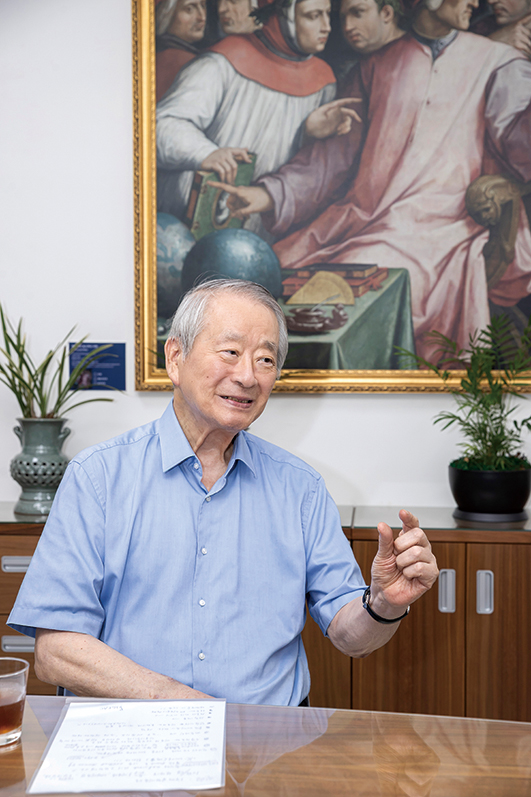
Kim Myung-in(hereafter “Kim”)
Thank you. Although I still have much to learn, I have been entrusted with the responsibility of leading this national cultural institution in its unique mission. My academic field is modern Korean literature. For many years, I taught modern Korean fiction and literary criticism at the university level while working as a literary critic. I also served as editor of Hwanghae Review, a quarterly journal published by the Saeol Foundation. If writing systems are the material medium through which human thoughts become text, then literature and journalism—the fields I have devoted my career to—represent some of the highest achievements in written communication. That understanding ultimately led me to accept this position.
Shin What inspired the creation of the National Museum of World Writing Systems, and how did it come to be located in Songdo International City, Incheon?
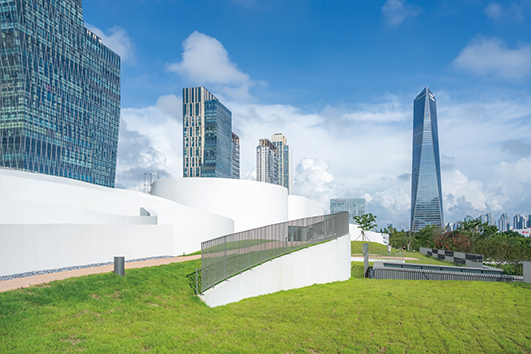
Kim The National Museum of World Writing Systems was established to collect, study, and exhibit both the diverse writing systems still in use around the world and the traces of scripts that have appeared and disappeared throughout human history. Its mission is to preserve and celebrate the richness and diversity of human civilization through writing. The museum’s location in Songdo International City reflects several factors working together: Songdo’s outstanding infrastructure as an advanced cultural city, Incheon citizens’ strong aspiration to establish a national cultural institution worthy of one of Korea’s leading metropolitan cities, and the dedicated efforts of the Mayor of Incheon and many others who helped make this vision a reality.
Shin A special exhibition marking the 140th anniversary of diplomatic relations between Korea and France is currently on view at the Champollion Museum in Figeac, France. Could you introduce the Champollion Museum, the world’s first museum dedicated to writing systems?
Kim The Champollion Museum – World Writing Systems was established in 1986 in Figeac, the hometown of the brilliant linguist Jean-François Champollion, who deciphered the ancient Egyptian inscriptions on the Rosetta Stone. Although modest in size, the museum presents exhibitions of exceptional quality, featuring writing-related artifacts donated or loaned from institutions such as the Louvre Museum and other collections from around the world, particularly those related to Egypt and ancient civilizations.
Shin Could you tell us more about the special exhibition currently on view at the Champollion Museum?
Kim From July 4 to October 11 this year, the Champollion Museum is hosting the special exhibition Hangeul: A King’s Dream, the People’s Language. Organized jointly by the National Museum of World Writing Systems and the Champollion Museum to commemorate the 140th anniversary of diplomatic relations between Korea and France, the exhibition is the first full-scale presentation of Hangeul in Europe. The exhibition features Hangeul-related artifacts from our museum, including a replica of the Hunminjeongeum Haerye, as well as related objects from French institutions, such as the Musée Guimet.
Shin What are your plans to establish the National Institute of World Writing Systems and to strengthen cooperation with cultural institutions in Incheon?
Kim One of our museum’s core missions is to study and introduce the diverse writing systems and writing cultures of countries and peoples around the world. For that reason, I believe our highest priority is to establish an affiliated research institute to deepen research into the history, current status, and unique characteristics of the world’s writing systems while expanding international academic exchange. Rather than creating an independent National Institute of World Writing Systems, we plan to begin by strengthening the museum’s existing research functions through an affiliated institute. Given Incheon’s population and urban scale, the city still lacks sufficient cultural facilities. As a national cultural institution, I believe our museum has an inherent responsibility to make a meaningful contribution to the city’s cultural development.
Shin When do you expect the chatbot, which will make it easier for visitors to search the museum’s collections and information, to become available?
Kim Our museum is developing Korea’s first chatbot system capable of providing not only general museum information but also detailed information about our entire collection. If development proceeds as planned, the service will be available on our website as early as this November. Globally, only a handful of institutions, including the British Museum, currently operate systems of this kind. We believe this will place our museum at the forefront of digital museum services.
Shin Many people believe that the ease and efficiency of Hangeul helped Korea take the lead in the IT and information revolution. In that context, I hope institutions such as the National Museum of World Writing Systems will undertake more specialized research. What are your thoughts on this?
Kim Hangeul’s simplicity and excellence have become even more evident in the digital age thanks to its remarkable adaptability. One of our museum’s major priorities will be to establish the affiliated research institute and to scientifically demonstrate Hangeul’s strengths in digital environments. At the same time, we hope this research will help preserve the diversity of the world’s writing systems in today’s digital landscape, which is largely dominated by English.
Shin Visitors to the National Museum of World Writing Systems appear genuinely engaged and eager to learn. Congratulations on surpassing one million annual visitors just two years after opening. Could you share details about any upcoming special exhibitions?
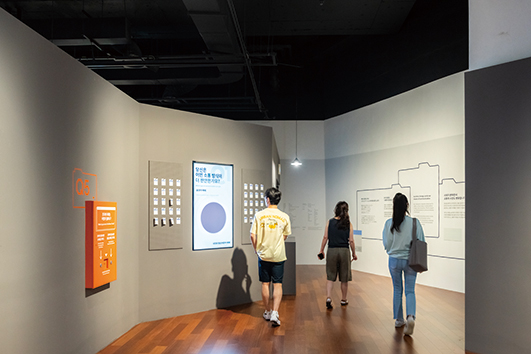
Kim Beginning in 2027, we plan to launch a new series of special exhibitions titled Crossroads of World Writing Systems, featuring two major exhibitions each year. The first exhibition, scheduled for the first half of 2027, will focus on the writing systems and epics of Southeast Asia. In the second half of the year, we will co-organize a large-scale exhibition on Chinese characters with the Palace Museum in China. We believe these exhibitions will mark an important milestone in establishing the National Museum of World Writing Systems as a truly global museum dedicated to writing systems.
Shin Thank you for sharing your valuable insights today. Together with the citizens of Incheon, I sincerely hope the National Museum of World Writing Systems continues to grow into a world-renowned institution.
Most Viewed
-
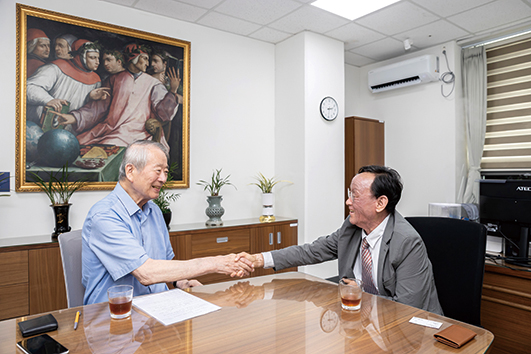
Meet a National Museum in IFEZ < Interview No. 15 Located in Songdo International City, the National Museum of World Writing Systems was born from both pride and responsibility: the pride of a country that created Hangeul, one of the most remarkable writing systems in human history, and the responsibility to share the value of writing with the world. Shin Yong-suk, International Cooperation Advisor to the Incheon Free Economic Zone Authority (IFEZA), met with the museum’s newly appointed director, Kim Myung-in, to discuss the museum’s present and future. A literary critic, former professor at Inha University, and former editor of the quarterly journal Hwanghae Review, Director Kim brings a deep background in literature and written culture to his new role.
-